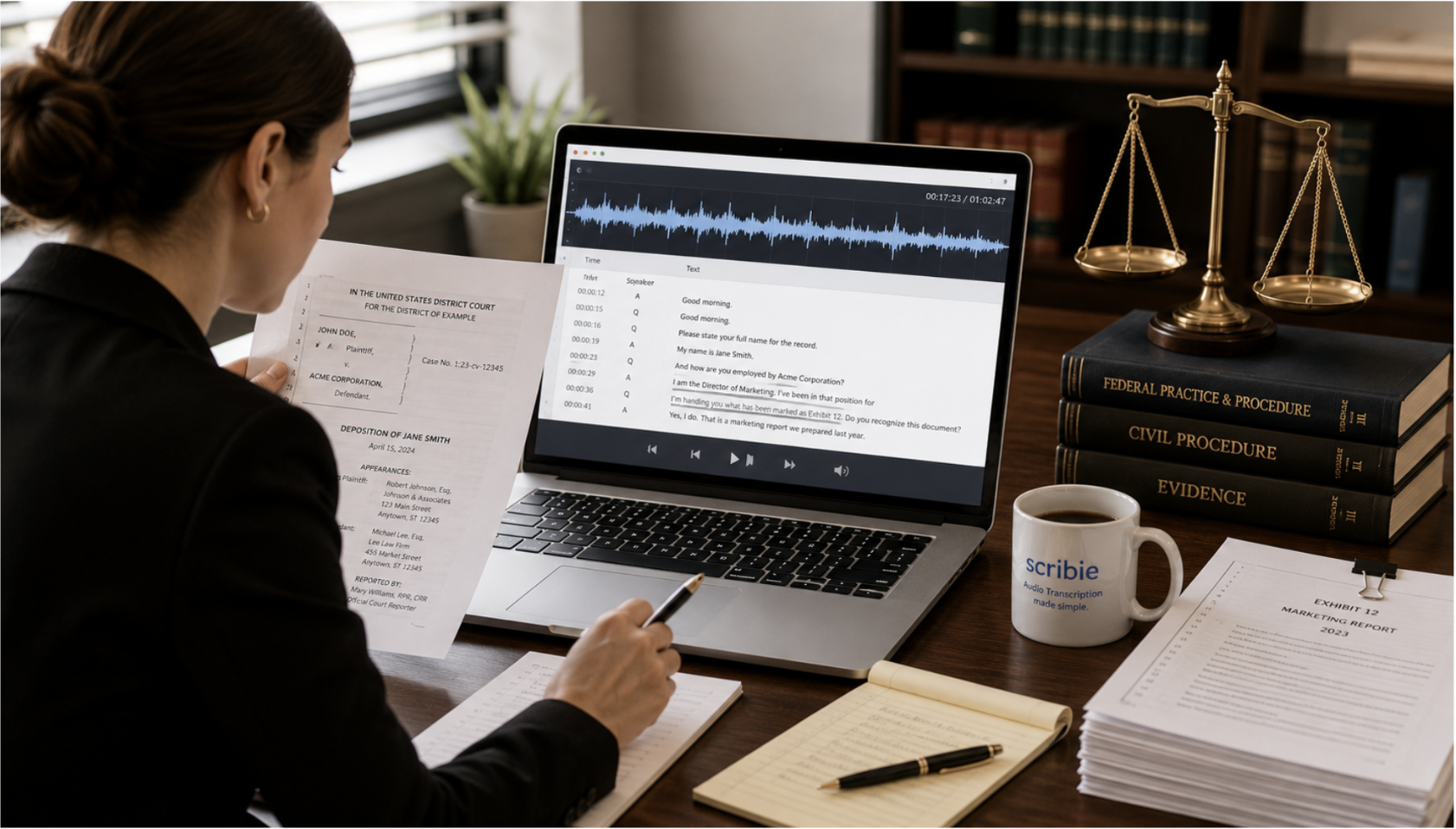
Legal professionals deal with a wide range of recorded proceedings, interviews, examinations, and other conversations that need to be converted into accurate, usable text. A reliable legal transcription service turns these recordings into organized documents, and the right legal transcription format makes them easier to review, search, share, and reference.
But legal transcription is not simply about converting speech into text. Depending on how the transcript will be used, it may also need specific speaker identification, timestamps, page layouts, indexes, appearances, captions, and other formatting requirements.
This is where legal transcription differs from ordinary transcription.
What Is Legal Transcription?
Legal transcription is the process of converting recordings related to legal matters into written transcripts while following the terminology, structure, and formatting requirements associated with legal documents.
The recordings may come from depositions, examinations under oath (EUOs), hearings, interviews, court proceedings, or other legal activities.
A general transcript may provide the spoken words with basic speaker labels and timestamps. A legal transcript, on the other hand, may need to follow a specific template or document structure so that it can be incorporated into a legal workflow.
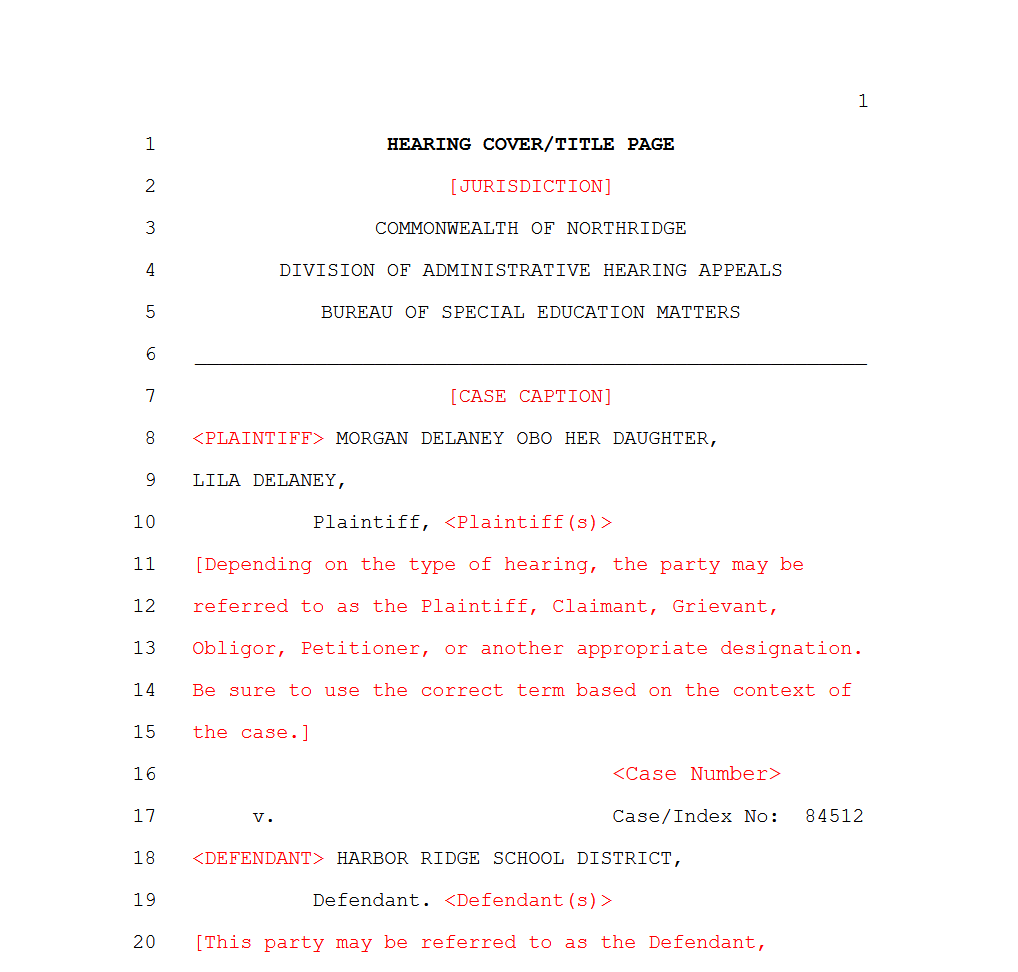
For example, a deposition transcript may require a case caption, attorney appearances, testimony indexes, exhibits, and stipulation pages. An EUO transcript may require claim information, appearances, an oath script, and testimony or exhibit indexes. A hearing transcript may require jurisdiction information, the judge or hearing officer’s designation, attorney appearances, and witness examination indexes.
The exact requirements can vary depending on the proceeding, jurisdiction, organization, and intended use of the transcript.
Common Legal Transcription Use Cases
Legal transcription can be useful whenever recorded speech needs to be preserved as a searchable and readable document. Some of the most common use cases include the following.
1. Deposition Transcription
Depositions are an important part of the discovery process. They allow attorneys to question witnesses under oath and preserve their testimony for use during litigation.
Because depositions can contain detailed testimony, objections, attorney questions, answers, and references to exhibits, having an accurate written record makes it easier for legal professionals to review what was said.
A properly formatted deposition transcript can also make it easier to locate specific testimony and prepare for subsequent proceedings.
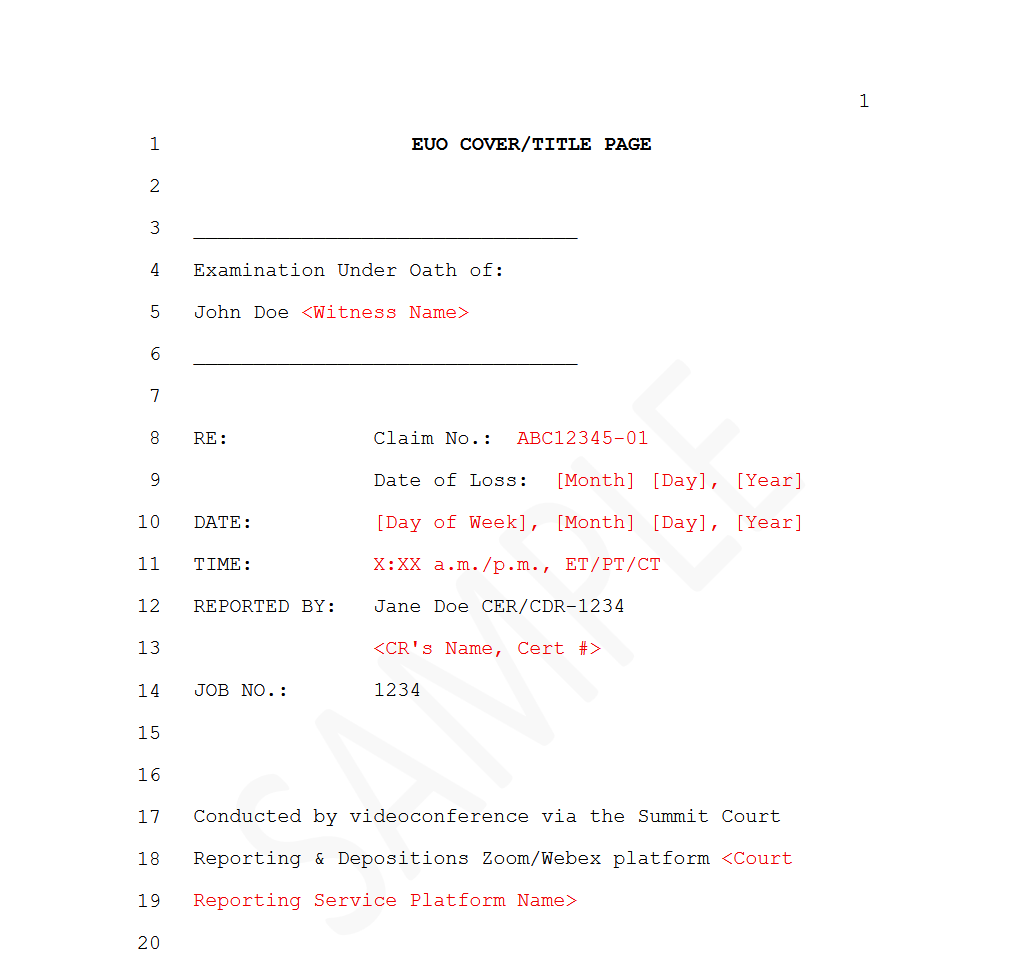
Scribie provides a standard deposition template that includes elements such as the case caption, appearances, testimony indexes, exhibits, requests, stipulations, and proceedings.
2. Examination Under Oath (EUO) Transcription
Examinations Under Oath are commonly conducted in insurance claims investigations. During an EUO, an insured or claimant may be questioned under oath regarding a claim or loss.
These proceedings can generate detailed testimony that needs to be preserved and reviewed.
An EUO transcript may include claim information, attorney appearances, the reporter’s on-record script, the notary oath, testimony indexes, and exhibit indexes.
Scribie’s standard EUO template is designed around these requirements.
3. Hearing Transcription
Hearings can involve multiple participants, including judges or hearing officers, attorneys, witnesses, and other parties. With several speakers and potentially lengthy exchanges, reviewing an audio or video recording can be time-consuming.
A transcript provides a written record that legal professionals can search and reference more efficiently.
Scribie’s standard Hearing template is designed for administrative and motion hearings and includes elements such as jurisdiction information, judge or hearing officer designation, attorney appearances, and multi-witness examination indexes.
4. Court Proceedings and Other Recorded Legal Matters
Legal transcription is not limited to depositions, EUOs, and hearings.
Law firms, attorneys, court reporters, insurance professionals, and other organizations may also need recordings of interviews, meetings, statements, negotiations, and other legal conversations transcribed.
The important consideration is not simply what type of recording is being submitted. It depends on how the resulting transcript will be used.
If the transcript is primarily needed for reference, a standard transcription may be sufficient. If it needs to follow a particular legal document format, custom formatting may be more appropriate.
Legal Transcription Format vs. Standard Transcription
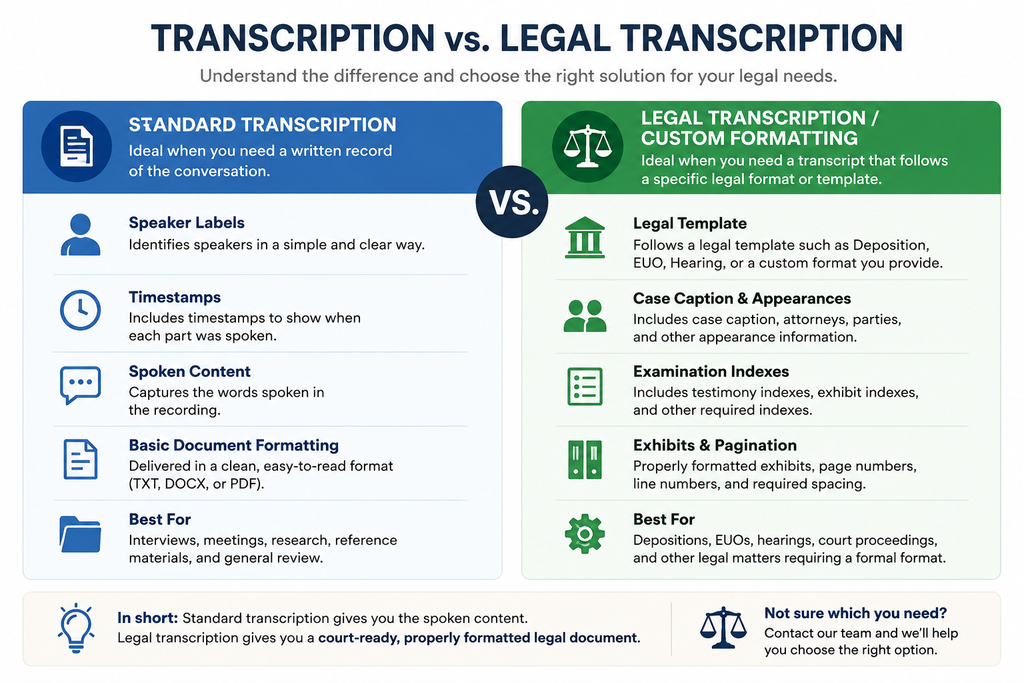
One of the most important things to consider before ordering a transcript is the difference between transcription and custom legal formatting.
Transcription Only
A standard transcription converts the spoken content of an audio or video recording into text.
This can be appropriate when you primarily need a written record of the conversation, with features such as speaker identification and timestamps.
It may be useful for reviewing interviews, meetings, recorded conversations, or legal material that does not require a specific court-style layout.
Transcription with Custom Legal Formatting
Some legal professionals need more than a basic transcript. They may require the document to follow an established template with specific formatting, headings, indexes, speaker labels, spacing, and other structural elements.
In these cases, you can prepare the transcript using a legal formatting template.
Scribie supports both standard formats and custom templates. You can use one of Scribie’s standard legal templates or provide your own template for the transcript to follow.
Choose a Standard Template or Provide Your Own
Not every legal organization uses the same transcript format. Requirements can vary between firms, agencies, court reporters, jurisdictions, and types of proceedings.
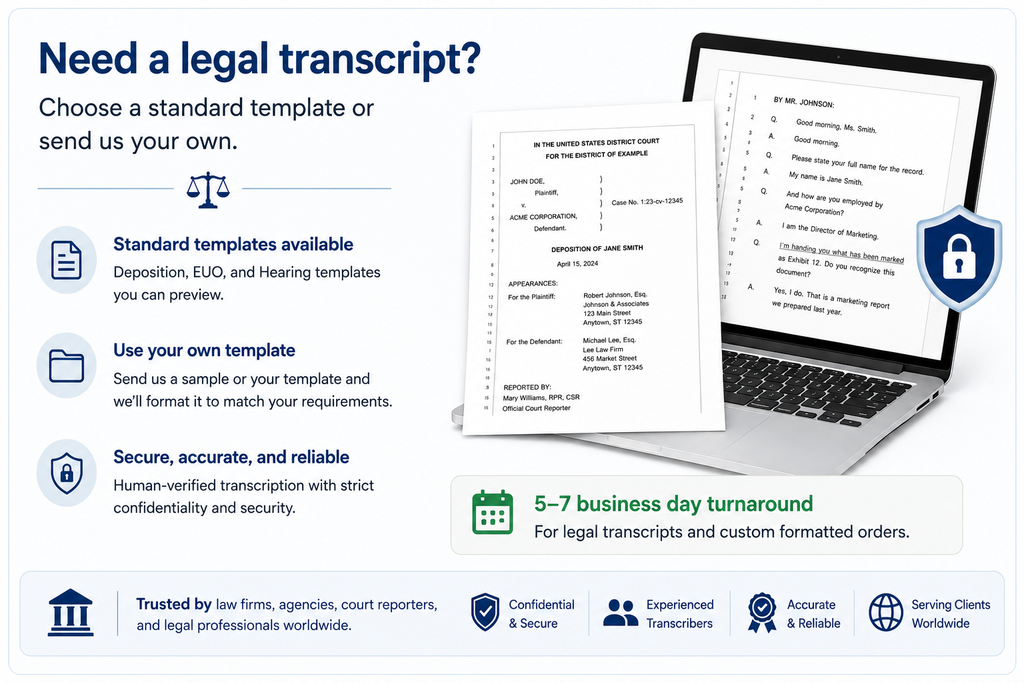
To make the process easier, Scribie provides three standard legal transcript templates that you can preview:
- Deposition Template — designed for sworn deposition testimony. (See full sample here.)
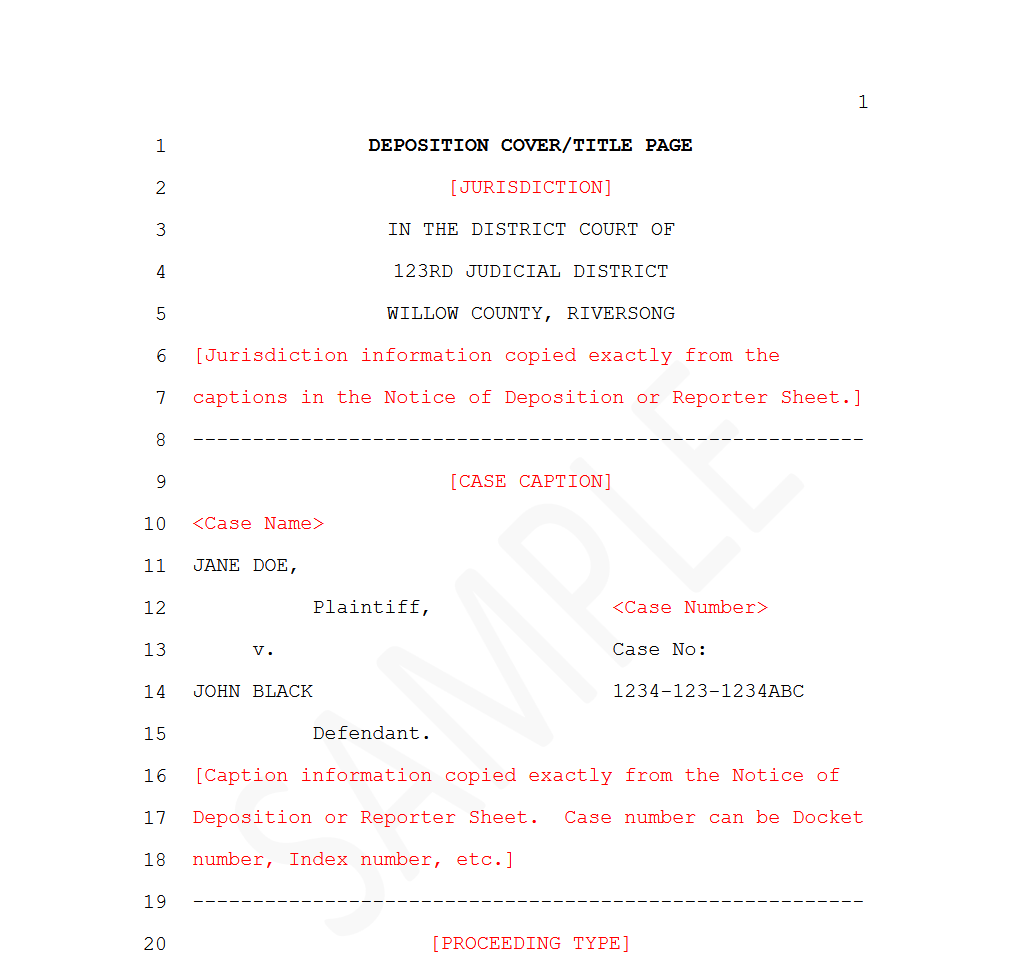
- EUO Template — designed for insurance Examinations Under Oath. (See full sample here.)
- Hearing Template — designed for administrative and motion hearings. (See full sample here.)
These templates allow you to see how the finished transcript can be structured before placing an order.
If none of these templates meet your requirements, you do not have to change your preferred format.
You can send Scribie a sample transcript or your own template, and the formatting can be configured to match your requirements. This can include elements such as speaker labels, spacing, timestamps, headings, and other formatting details.
For organizations with recurring transcription needs, providing a template can also help maintain consistency across transcripts.
What Should You Provide When Ordering?
The better the instructions provided with an order, the easier it is to produce a transcript that matches your expectations.
When submitting a legal transcription request, consider providing:
- The audio or video recording
- Your preferred transcript format
- A sample transcript, if you have one
- Your own template, if applicable
- Special spelling or terminology requirements, especially unique spellings
- Speaker names or identifying information when available, especially unique spellings
- Any other formatting or transcription instructions
If you are unsure which format you need, you can start by reviewing Scribie’s standard legal templates or contact the team to discuss your requirements.
How the Legal Transcription Process Works
Getting a legal transcript does not need to be complicated.
Step 1: Submit Your Recording
Upload your audio or video file and provide any relevant instructions.
Scribie supports common audio and video formats, including MP3, WAV, M4A, FLAC, MP4, MPEG, and MOV.
Step 2: Provide Your Formatting Requirements
If you need custom legal formatting, provide your template or sample transcript.
If you do not have a template, you can select from Scribie’s standard Deposition, EUO, or Hearing formats.
The formatting requirements can be reviewed and set up before transcription begins.
Step 3: Receive Your Transcript
Once the transcription and formatting are complete, you receive a written transcript that follows the selected or provided format.
For legal transcripts, the standard turnaround time is 5–7 business days.
For recurring or larger-volume requirements, legal teams and agencies can also discuss custom arrangements based on their workload and preferred turnaround time.
Why Use a Legal Transcription Service?
Transcribing legal recordings internally can take significant time, particularly when recordings contain multiple speakers, legal terminology, objections, examinations, or lengthy testimony.
Outsourcing transcription allows attorneys, paralegals, court reporters, and other legal professionals to spend more time on case-related work instead of manually transcribing recordings.
A specialized legal transcription service can also provide a more consistent approach to speaker identification, terminology, and document formatting.
Scribie uses verified transcribers who are trained in transcription and legal terminology and follows confidentiality and security protocols for legal documents.
Get the Legal Transcription Format You Need
There is no single transcript format that works for every legal proceeding.
A deposition may require a different structure from an EUO. A hearing may require a different format again. And your organization may already have a template that you need to use consistently.
That is why Scribie offers both standard legal templates and custom formatting.
You can preview the Deposition, EUO, and Hearing templates on the Scribie Legal Transcription page. If you have a different format, simply provide a sample transcript or your own template so the required formatting can be established.
With the right recording, instructions, and format, you can get a transcript that is not only readable but also fits into your existing legal workflow.
Get Started With Legal Transcription
If you have a deposition, EUO, hearing, or another legal recording that needs to be transcribed, you can learn more about Scribie’s legal transcription service and review the available templates here: https://scribie.com/legal.
If you require a format that is not included among the standard templates, send us your sample or template and let us know what you need.
Scribie’s legal transcription service provides human-verified transcription and custom legal formatting, with a standard turnaround time of 5–7 business days for legal transcripts.
Leave a Reply